
Meriden VINELink Release Coverage
Connecticut’s program is the Statewide Automated Victim Information Notification system, known as CT SAVIN. The CT DOC Victim Services Unit works with the National Victim Notification Network to provide correctional and court-event notices. For a Meriden case, coverage can follow a person accused or held in a CT DOC correctional center, a sentenced person in a state institution, or a covered court case. New Haven Correctional Center serves the Meriden superior court, so a local arrest may appear under a state DOC agency rather than a Meriden jail.
Covered events are more specific than the word “release.” CT SAVIN lists bond out from a correctional facility, discharge from court, escape, and return to custody for accused people. It also lists parole hearing dates, community-release reviews and placements, end-of-sentence notice, escape or absconding, and inmate death. A bond-out alert does not mean sentence completion. A community placement is not the same as full discharge. Read the event label and reporting agency before drawing a conclusion.
| VINELink field or event | What it can show |
|---|---|
| Identity | Name or identification details used to distinguish records |
| Custody status | Whether the reporting agency lists a current custody state or change |
| Reporting agency | DOC or court source connected to the record |
| Bond or court discharge | A pretrial or court-driven release event |
| Community or parole event | A move from a facility under continued state control |
| End of sentence | A discharge event distinct from bond, transfer, or parole |
The Connecticut VINELink entry page is the official state starting point.
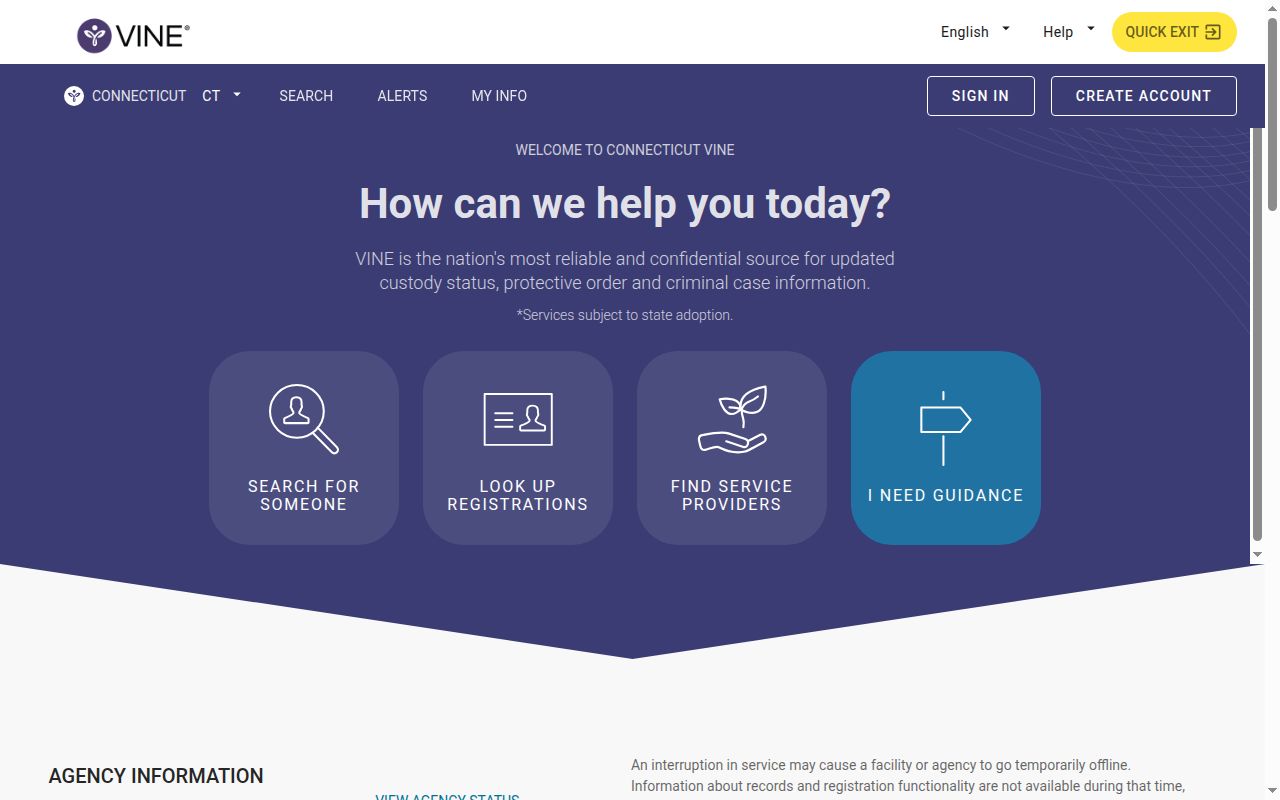
It connects the search and alert process to Connecticut rather than to an unofficial Meriden roster.
Search a Meriden Inmate
Search one person at a time. Exact details reduce false matches, especially when names are common. If the person was only processed and released by Meriden police, a VINELink result may not exist because the person may never have entered DOC custody or a covered notification track. A person sent from Meriden court to New Haven Correctional Center is different. That case should be checked in the statewide correctional system and under the court record.
- Open the Connecticut state page and choose the person search. Select Connecticut when the national interface asks for a state.
- Enter the exact name. Add an available ID or age detail to separate people with similar names.
- Open the matching record instead of relying on a result row. Check the identity, reporting agency, record type, and custody wording.
- Read any release or change event literally. Note whether it says bond out, court discharge, community placement, end of sentence, or another status.
- Save the access date and compare the result with CT DOC and the Meriden court docket when the legal reason for release matters.
The national VINELink portal provides the specific-person search interface.
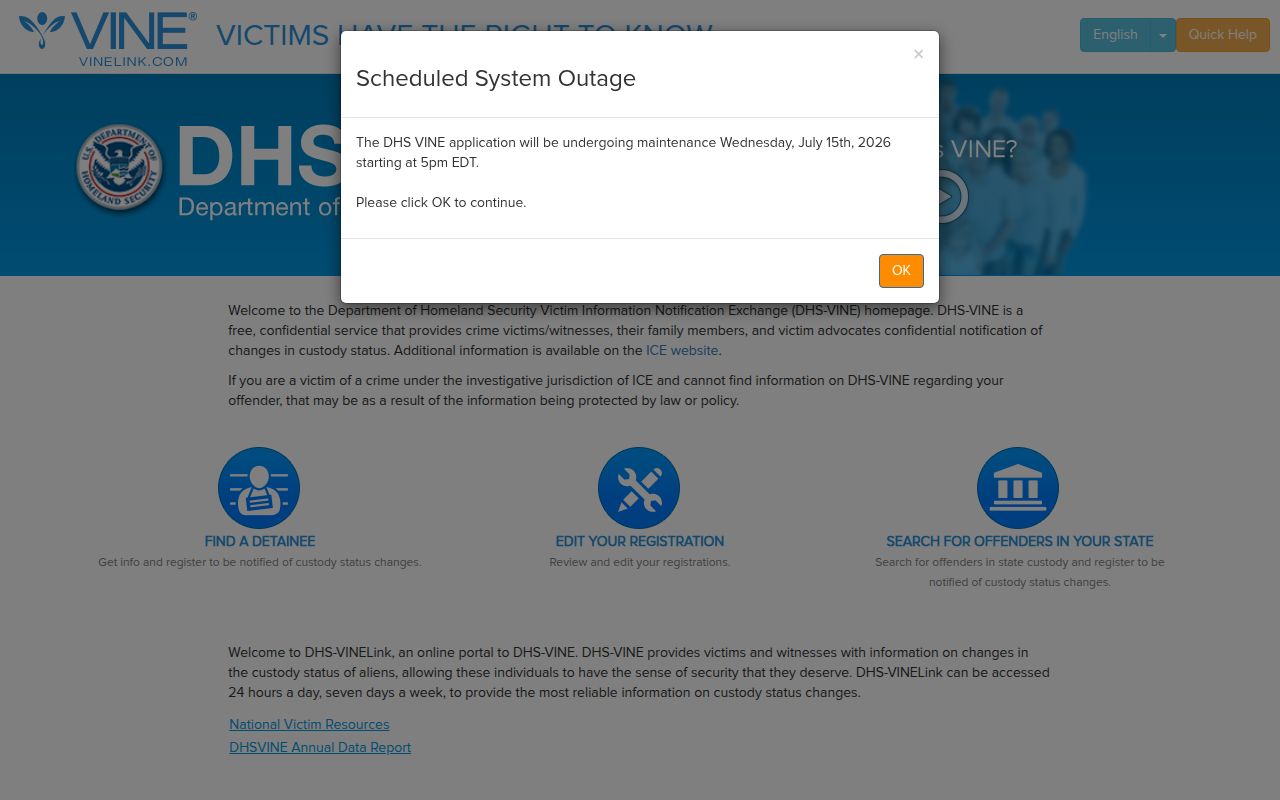
A matching result can support a custody check, but the underlying DOC or court record remains the source for sentence and disposition details.
Meriden SAVIN Uses Two Tabs
CT SAVIN has a state-specific rule that matters in Meriden. The OFFENDERS tab covers Connecticut DOC information. The OFFENDERS WITH COURT CASES tab covers Judicial Branch information. Anyone who wants both correctional custody changes and court-case notices must register under both. One registration does not automatically cover the other track.
This split fits Meriden’s custody path. A person can bond out of New Haven Correctional Center, be discharged by the court, return to custody, move to a community placement, or reach the end of a sentence. A DOC change and a court disposition may explain different parts of the same event. Registering in both places helps prevent a court-driven release from being missed because only the offender record was followed.
The Victim Services explanation of CT SAVIN documents the two-tab requirement and the available notification channels.
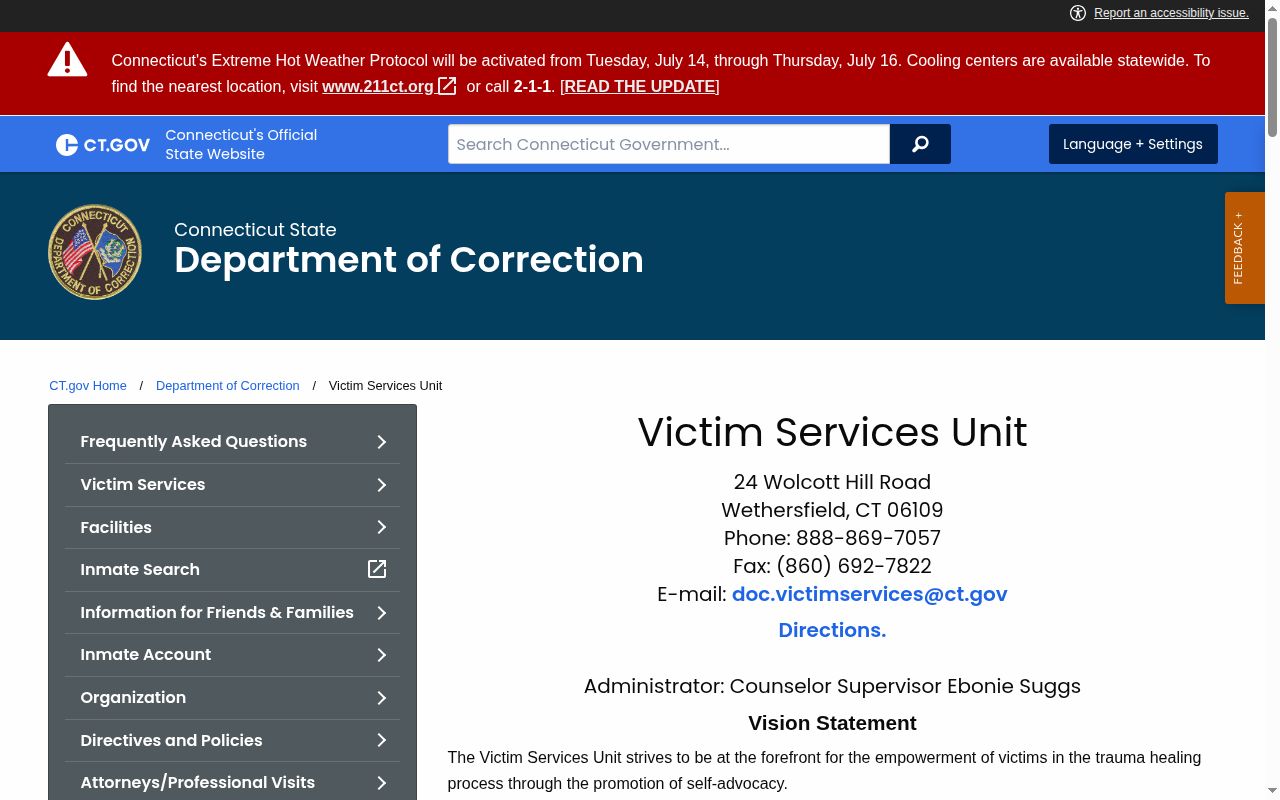
That official description is the best source for Connecticut coverage and its limits.
Note: Search and register in both record tabs when a Meriden release could result from either DOC custody or a court event.
Register Meriden Release Alerts
Registration should occur while the person’s record is active. CT SAVIN offers notices in English and Spanish through phone calls, email, and TTY, as available. Its toll-free line is 1-866-277-7477. Choose methods that will remain current through the likely custody period. A changed phone number or email address can break delivery even when the agency sends the event.
- Find and open the correct person under the correct tab.
- Select “Get Notified” or the equivalent registration control.
- Choose phone, email, or TTY from the methods offered for that record.
- Create or enter the requested four-digit PIN or confirmation credential. Keep it private because it may be used to confirm or manage alerts.
- Complete registration, then repeat under the other CT SAVIN tab if both DOC and court notices are needed.
- Update the registration whenever contact information changes.
A notification is a prompt to verify, not a full legal record. Write down its wording and time. Then open CT DOC or the court docket to learn whether the event was bond, court discharge, a placement, parole, transfer, or completion of sentence.
Read Meriden Release Results
A released or custody-change label is strong evidence that the reporting agency sent a status event. It does not merge every part of the case. CT DOC offender information may contain the person’s status, current location, admission date, offense, sentence fields, estimated release date, detainer, and special parole details. The court docket can show bond, disposition, sentence, dismissal, nolle, or conviction. These sources answer different questions.
First check who reported the event. Next identify the event type. Then compare dates and identifiers. A bond-out record from New Haven Correctional Center means the person left that accused-status custody track, but it does not show that all charges ended. Discharge from court is a distinct event. Community release means the person may have left a facility while state supervision continues. End-of-sentence notice is closer to sentence completion, though a separate probation term may still exist.
- Custody change
- An agency-reported change that needs its exact event label for context.
- Community release
- Placement outside a facility while correctional control or supervision may continue.
- Detainer
- A hold from another authority that may prevent release to the community.
- Full discharge
- Completion of the sentence track covered by the reporting system.
Meriden VINELink Search Limits
VINELink is not a rolling list of everyone released in Meriden. It is not a complete historical archive. CT DOC Victim Services says alerts generally stop once an offender discharges and completes the Connecticut sentence, unless post-incarceration probation later produces a violation and a return to the system. If the person re-enters, the user may need to register again. This makes VINELink strongest before and during an expected release.
The system also does not replace federal locators. Bureau of Prisons custody belongs in the BOP Inmate Locator. Immigration detention belongs in ICE’s Online Detainee Locator System. A short hold at the Meriden Police Department may require the Police Records Division and court docket. Youthful-offender information and some ICE-related custody are excluded from CT DOC public display. Data feeds can lag, and no result can have several causes.
Identity mismatches are another limit. A shortened name, suffix, spelling change, or common birth date can return the wrong person or no person. Compare every result with a DOC number, court docket, agency, and available age detail. Do not rely on a name alone. When the record has ended, the Judicial Branch disposition is often more durable because it can still explain whether a Meriden case ended in bond, dismissal, nolle, conviction, probation, or another outcome, subject to erasure and confidentiality rules.
Delivery is not guaranteed. Phone filters, a full email inbox, an old TTY route, or contact information that was never updated can interrupt notice. The four-digit PIN helps manage and confirm notifications, but it does not make the underlying feed instantaneous. Keep the agency record and VINELink registration separate: one documents the custody or court event, while the other carries the alert.
Note: Treat a VINELink alert as a timely signal, then verify the release reason and continued supervision in the originating record.
Meriden Release Search Fallbacks
Use the CT DOC offender search for someone committed to New Haven Correctional Center, York Correctional Institution, Cheshire Correctional Institution, Manson Youth Institution, or another state facility. Search by DOC number when possible. Open the detail record and compare status, location, release fields, and detainers. A person shown in a current facility is still in custody even if a future estimated release date appears.
For a police short hold, contact the Meriden Police Records Division and use the Judicial Branch pending or conviction search. For a released person who no longer appears in an active system, the court disposition and agency records may be more durable. The broader Meriden released-inmate search path separates local police, CT DOC, court, parole, BOP, and ICE records so a transfer is not mistaken for release.
When an alert and an agency record disagree, use the newest originating record and contact the office that maintains it. CT DOC Public Information can address correctional information beyond the public search. The court clerk handles specific public docket documents. Meriden Police Records handles local arrest-processing material. Each channel should stay tied to the custody event it actually records.
Federal and immigration checks require the same care. The Bureau of Prisons locator can display a federal release date, while ICE ODLS locates people in covered immigration custody. Neither system describes an ordinary Meriden Superior Court case. Move to those sources only when the case facts show a federal prosecution, federal transfer, or immigration hold. A disappearance from CT DOC alone is not enough to choose that path.